
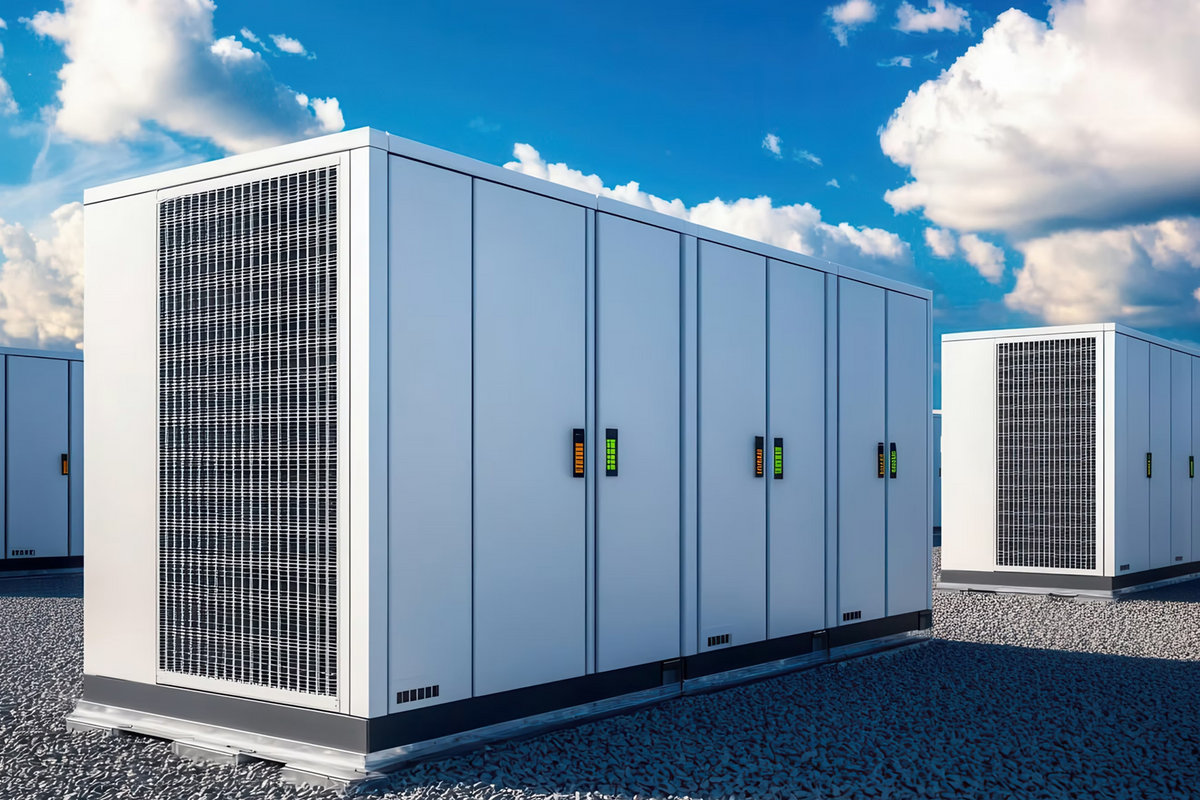
ENERGY STORAGE SYSTEMS
A smarter way to keep the Inland Empire's power reliable and affordable.
WHAT IS ENERGY STORAGE?
Energy storage is a way to save electricity when there is plenty of it and use it later, when people need it most. You can think of it like a giant rechargeable battery for the electric grid, similar to the battery in your phone but much larger. When solar panels are producing lots of power during the day, a storage system charges up. Later, on hot evenings when demand is high, it sends that stored power back to the grid.
There are two kinds of storage. Some sits on the user's side of the meter, like the solar-and-battery setup on a home. Dirac is the other kind: grid-scale storage that serves the whole regional power system, not a single building.
This helps keep electricity reliable, eases strain on the power system, and supports cleaner energy by making better use of sources like solar and wind.
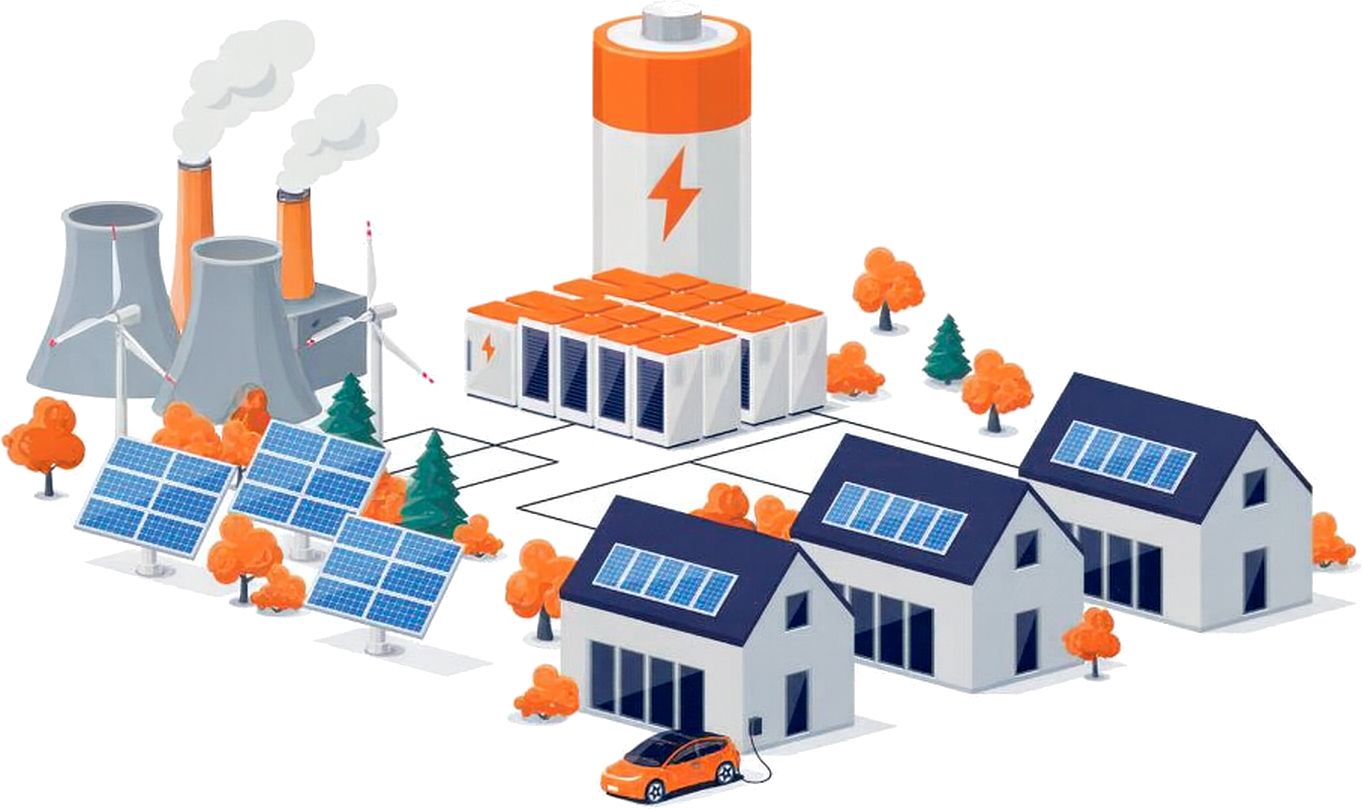
HOW ENERGY STORAGE WORKS
When electricity is plentiful, the system charges up. When demand peaks, on hot summer afternoons when air conditioning pulls hard on the grid, it sends that stored power back to the grid.
That quick, flexible response helps prevent outages and ease price spikes.
Today's utility-scale storage projects, including Dirac, use lithium iron phosphate (LFP), a chemistry the industry has standardized on for new builds because it stays more stable at high temperatures.
WHY ENERGY STORAGE IS IMPORTANT FOR CALIFORNIA
California's energy grid is changing fast. Demand is growing, weather patterns are more unpredictable, and much of the state's infrastructure was built decades ago. Projects like Dirac help make the grid stronger, smarter, and more reliable.
Grid Reliability
Storage helps prevent outages by sending power back during peak demand, keeping the electricity supply steady and responding in seconds. The Inland Empire is among the most heavily loaded grids in California, and facilities like Dirac are part of how the state is meeting rising demand without building new gas-fired peaker plants.
More Affordable Energy
Storage releases stored energy during peak pricing periods rather than generating new power. That helps flatten the price spikes that hit consumer bills hardest during summer afternoons and grid stress events.
Energy Independence
Local power storage reduces reliance on imported electricity from other regions, and reduces the risk that disruptions outside California reach Chino homes and businesses. The Inland Empire has been one of the most outage-exposed corners of Southern California in recent summers, and local storage is part of how that pattern can change.
Weather Resilience
Storage provides additional grid capacity during extreme weather events and heat waves, the high-demand periods when the grid is most prone to stress failures and outages.
Smart, Low-Impact Infrastructure
Energy storage facilities operate quietly and produce no operational emissions. Their permanent footprint is clean.
Economic Stability
Energy storage projects create construction jobs during the build and contribute steady tax revenue throughout their operating life. Dirac's specific community benefits are detailed on the Home page.
WHERE TO LEARN MORE ABOUT DIRAC SPECIFICALLY